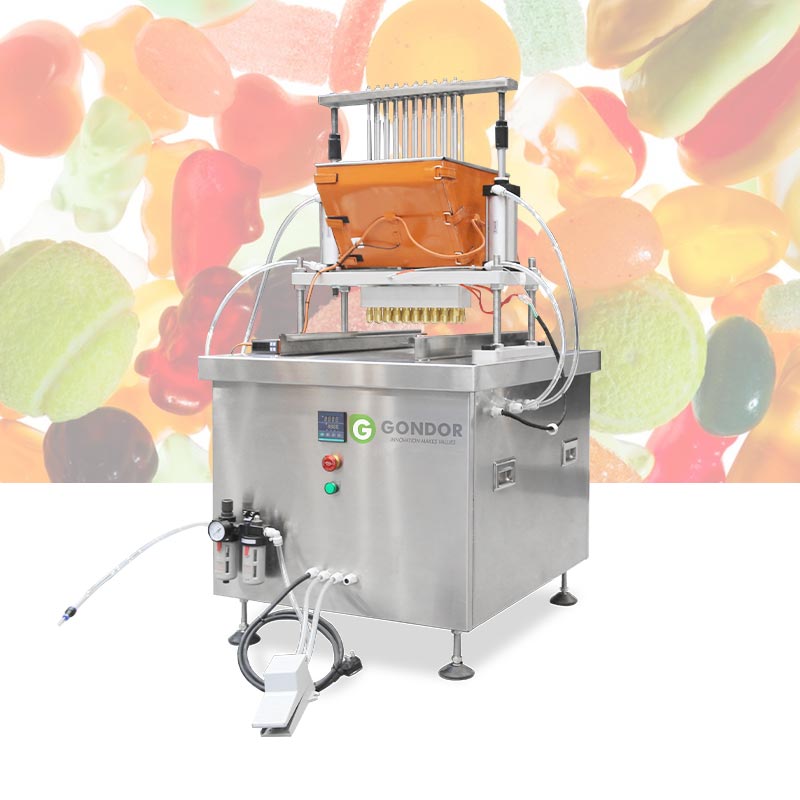
Gondor Vertical Candy Depositor Machine
In a candy production workshop, the daily challenge is often not merely whether a single piece of candy can be produced, but whether every single piece can be made identical—consistent in weight and shape, with no deviation between batches.
For manufacturers of gummies, hard candies, toffees, and nougats, the greatest risk associated with manual pouring or semi-automated operations is a loss of product consistency. An extra two or three grams in a single piece may seem negligible, but when multiplied by a daily output in the millions, the resulting waste of raw materials represents a staggering hidden cost.
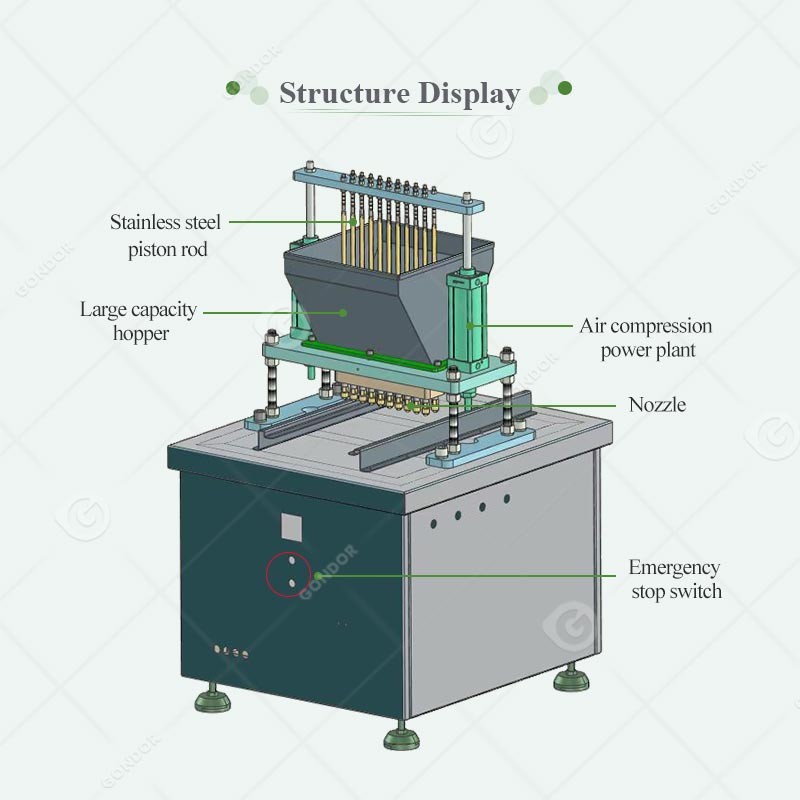
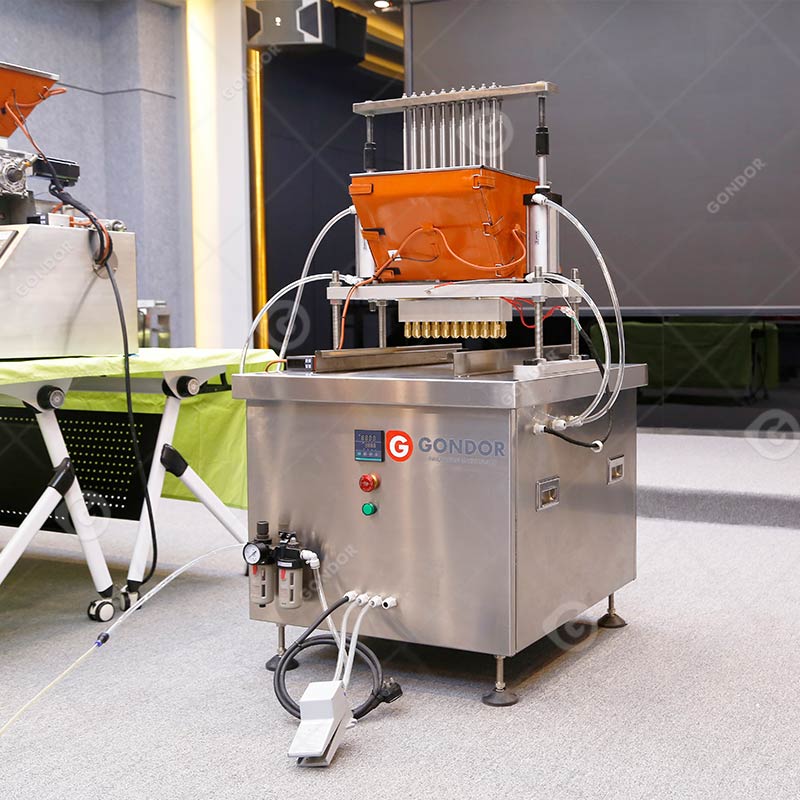
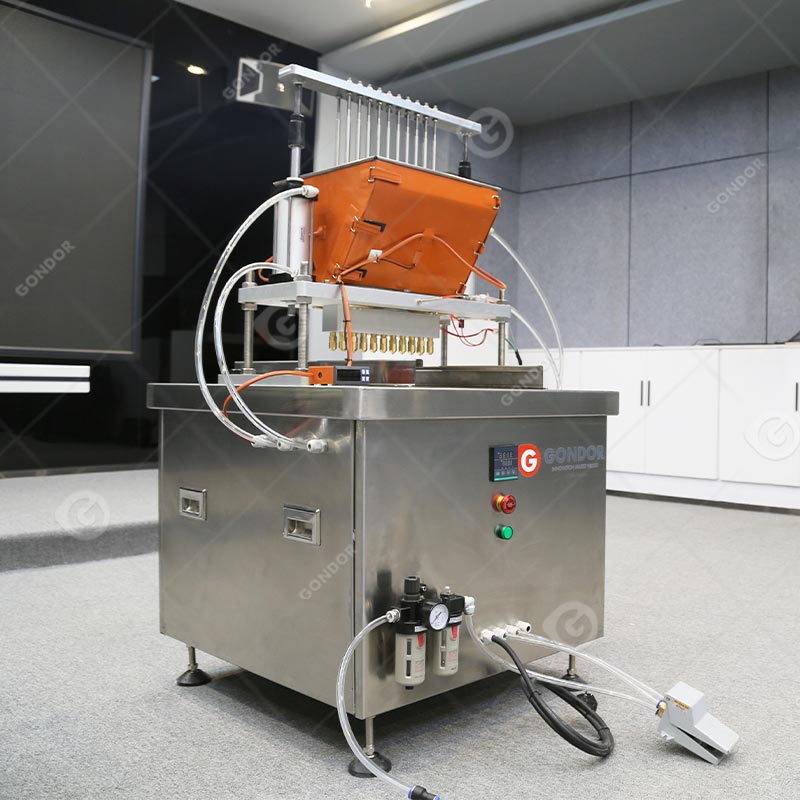
The vertical candy depositor precisely injects syrup from the cooking stage into molds. Utilizing PLC control to ensure an exact dosage for every shot, it maintains candy shape, weight, and quality at a consistent standard. For medium-sized factories producing anywhere from a few hundred kilograms to two tons daily, food companies that have just upgraded to automation, or startups needing to scale up quickly without compromising quality control, this equipment offers a reliable pathway from manual to automated production.
The machine is suitable for a wide range of mainstream products, including gelatin and pectin gummies, hard candies, toffees, and filled candies. Different candy formulations—varying in viscosity, temperature sensitivity, and crystallization tendencies—impose distinct demands on the depositing system; the machine’s adjustable parameter settings are key to meeting these diverse requirements.
Candy Depositor Machine Technical Specifications
| Parameter | GD-V (Vertical) | GD-D (Tabletop) |
|---|---|---|
| Depositing Speed | 20-35 cycles/min | 30-60 cycles/min |
| Capacité de production | 40-150 kg/h | 60-100 kg/h |
| Tension | 220V/50Hz | 220V/50Hz |
| Pouvoir | 1.2 kW | 4.2 kW |
| Nozzles | 20 pcs | 10 pcs |
| Machine Dimensions | 804×660×1300 mm | 1000×760×870 mm |
| Poids | 320 kg | 100 kg |
| Applicable Candy Types | Hard candy, gummies, toffee, nougat, filled candy | Small-scale / lab use |
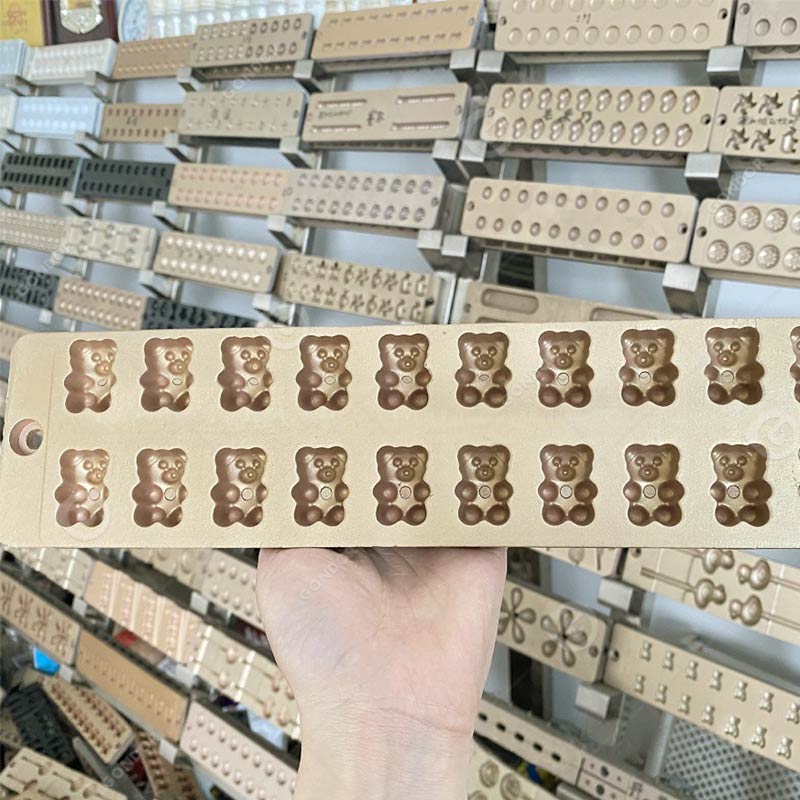
Frame Material: 304 food-grade stainless steel Control System: Siemens PLC + touchscreen interface Certifications: ISO 9001, ISO 14001, ISO 45001, CE, BSCI, ETL Mold Options: Silicone molds / Metal molds (both customizable)
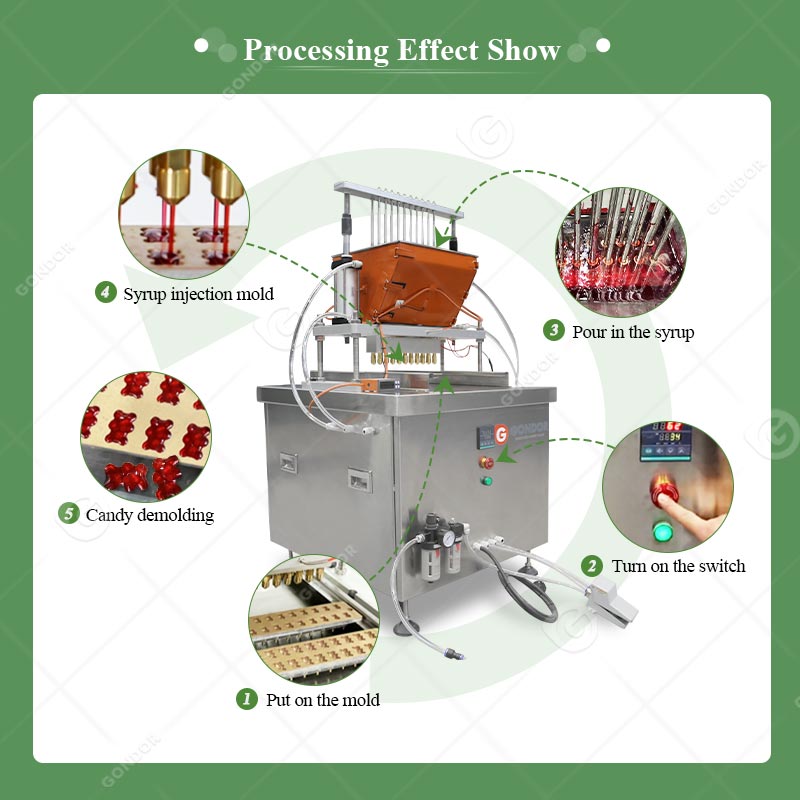
Working Principle: Four Stages from Syrup to Finished Candy
The machine’s operating logic breaks down into four sequential stages, each solving a specific processing challenge.
Throughout the process, sensors monitor temperature, deposit weight, and mold position in real time. Any deviation outside the programmed tolerance triggers an automatic stop or alarm. For the operator, the job shifts from watching each piece of candy to monitoring parameters and rhythm — a fundamentally different role.
Candy Depositing Machine Application Scenarios
Core Value: Four Returns That Matter on the Production Floor
Precision is profit.
A deposit weight tolerance of 0.2-0.5 grams per piece may not sound extraordinary. But on a production line outputting 200 metric tons of gummy candies per year, saving 0.3 grams per piece translates to hundreds of kilograms of raw material saved annually. Not from evaporation or process loss — purely from “overshooting the fill.” The PLC-controlled dosing system on this machine cuts that waste to the minimum achievable level.
Continuous production is a daily reality, not a concept.
Semi-automatic equipment often requires a full stop when switching between batches — different molds, different fill volumes, different temperature profiles. The vertical depositor’s continuous-run design allows operators to swap molds and adjust parameters without interrupting production. For factories running multiple candy SKUs on the same line, this flexibility means less downtime and more effective output. Well-maintained units routinely operate 16-hour shifts.
Food safety is the entry ticket, not a bonus feature.
304 stainless steel is standard in confectionery machinery, but the real differentiator lies in the details — weld seam finishing, surface roughness, elimination of dead zones where product can accumulate. The hopper and piping on this machine are designed with polished welds and detachable connections, making them easy to clean and resistant to bacterial buildup during long production runs.
Floor space is an operating cost.
The vertical layout isn’t about looking tall — it’s about footprint efficiency. For plants with limited floor area, a single unit occupying roughly 0.5 square meters concentrates production capacity in the vertical dimension, reserving valuable ground space for downstream packaging or future line expansion.