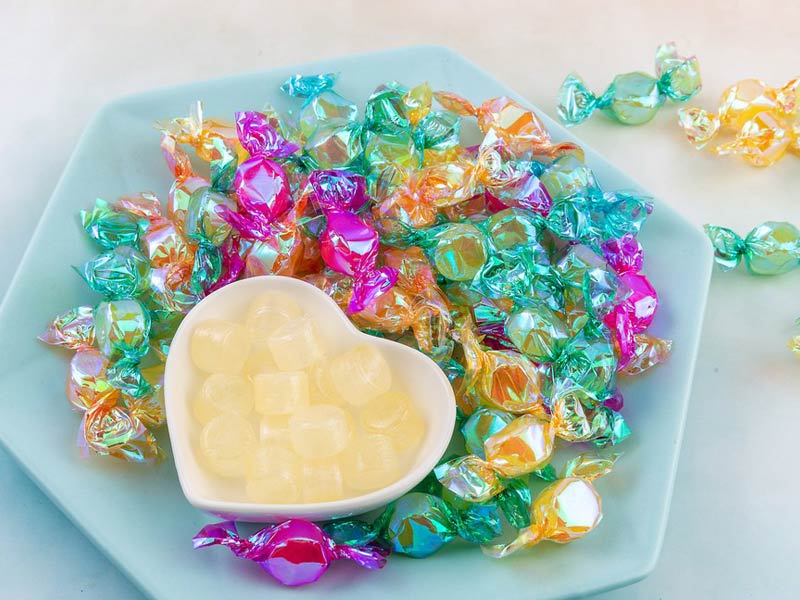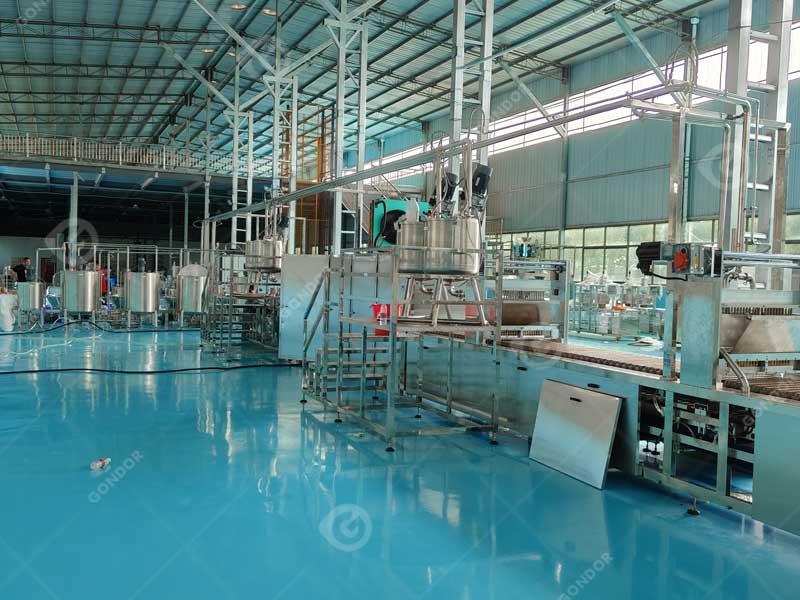

Gummy candy, with its rich texture, diverse shapes, and broad market appeal, has become one of the fastest-growing categories in the global confectionery industry. From traditional fruit gummies to functional vitamin gummies, CBD gummies, and collagen gummies, market segmentation continues to deepen — and manufacturers’ demands for product quality and production efficiency are rising accordingly.
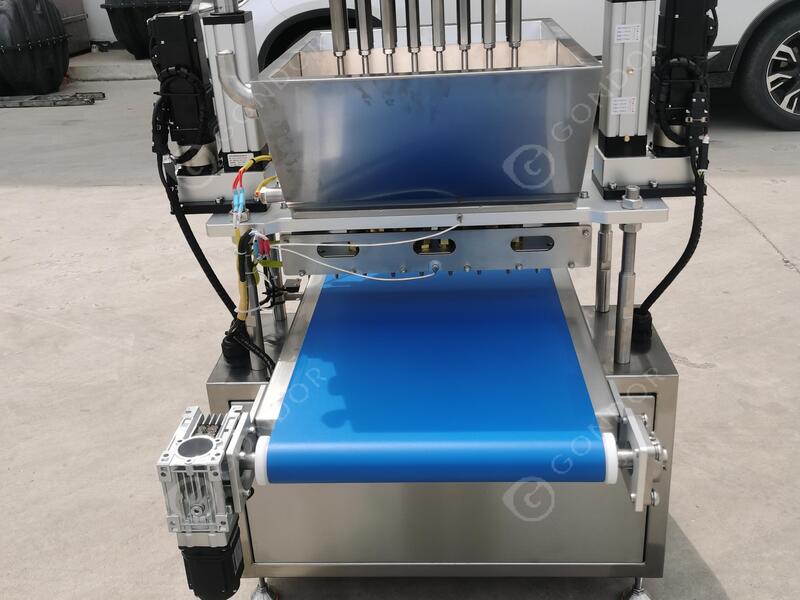
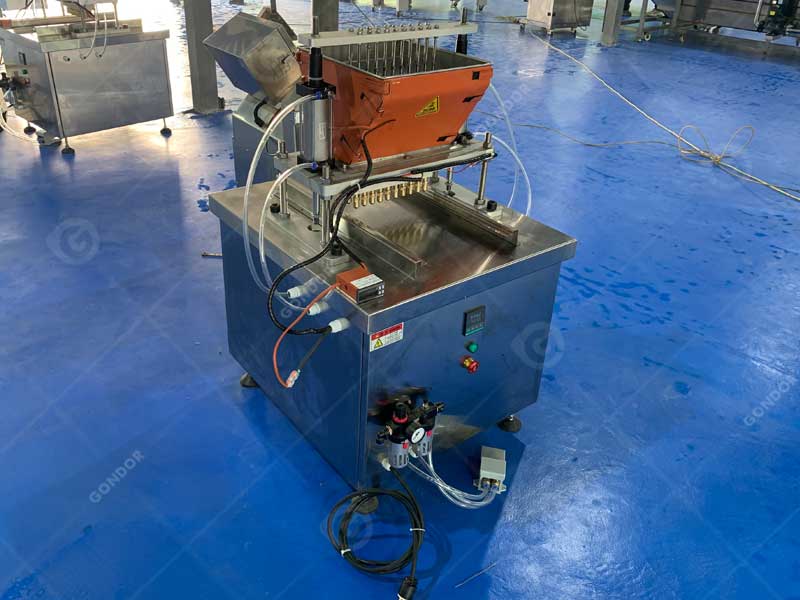
In modern gummy production, the depositing stage directly determines the weight consistency, visual integrity, and overall production efficiency of the final product. For this reason, a growing number of small and medium-sized confectionery manufacturers are adopting semi-automatic gummy depositor machines to replace inefficient manual molding methods.
So how exactly does a semi-automatic gummy depositor operate? And how does it transform cooked syrup into uniformly shaped, consistently high-quality gummy products?
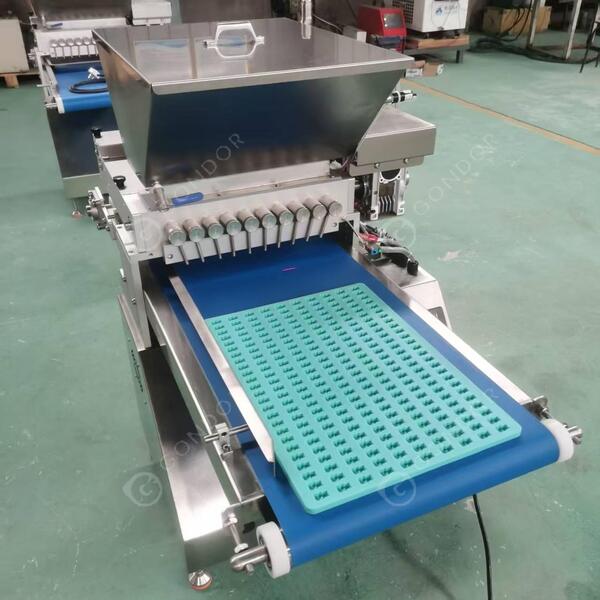
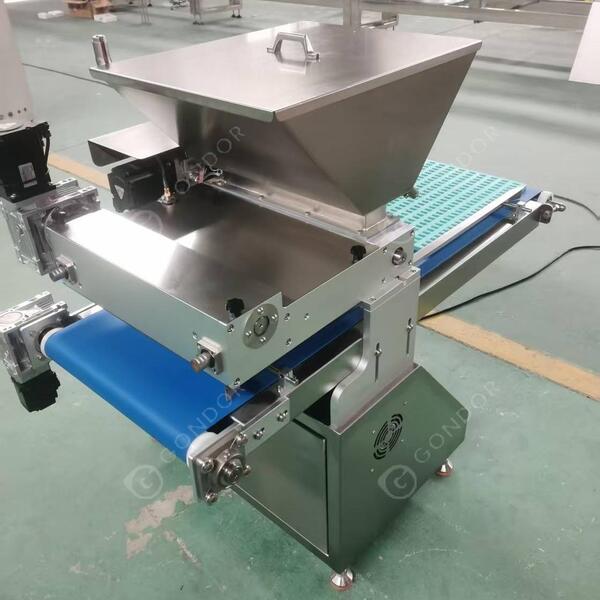
This article walks you through the complete workflow and technical principles in 7 key steps.
Process Overview:
Step 1:Preparing the Gummy Syrup Mixture
The production of any high-quality gummy begins with rigorous recipe preparation. Before depositing can begin, operators must precisely weigh and mix the following ingredients according to the formulation:
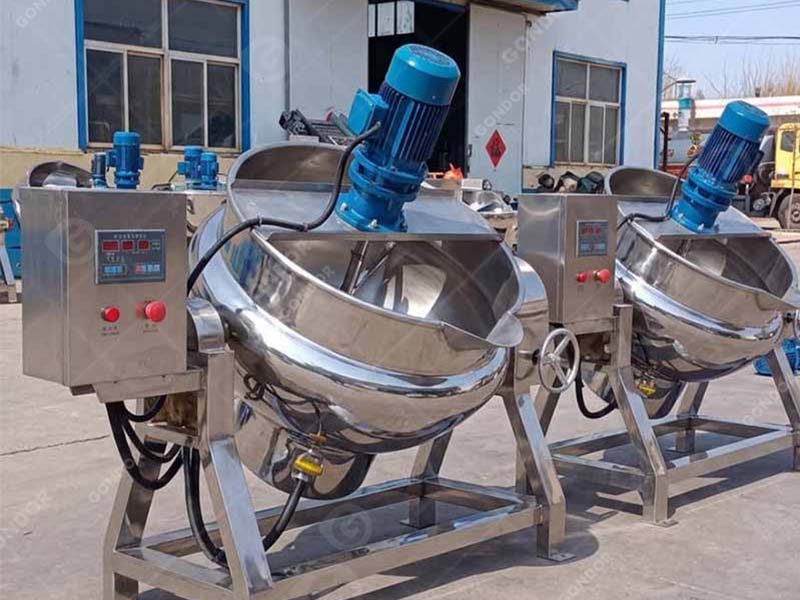
The mixed ingredients are first fed into a jacketed boiling kettle or vacuum cooking system for heating and dissolution. At this stage, temperature control is critical:
⚠Excessive temperatures can denature gelatin proteins and destroy their gelling capacity; temperatures that are too low increase syrup viscosity, affecting flowability and subsequent depositing accuracy. Precise temperature control is therefore the first line of defense in ensuring syrup quality.
Step 2:Transferring the Cooked Syrup into the Hopper
Once cooking is complete, the syrup is quickly transferred through piping into the insulated hopper of the semi-automatic depositor. At this point, the syrup temperature is typically maintained between 70°C and 90°C to ensure optimal flowability.
The hopper is generally equipped with the following core components:
- Heating system — maintains syrup temperature, prevents skin formation
- Insulated jacket — minimizes heat loss, ensures uniform temperature
- Stirring mechanism — continuous gentle agitation prevents ingredient settling and separation
For functional gummies containing vitamins, collagen, or plant extracts, uniform agitation in the hopper is especially critical — it directly determines the consistency of active ingredient distribution in each gummy, which is essential for product efficacy compliance.
Step 3:Setting the Depositing Parameters
Before production officially begins, operators must precisely adjust machine parameters according to product specifications. The core settings include:
Deposit weight — determines the gram weight per gummy (e.g., 2g / 5g / 10g)
Deposit speed — controls the number of deposits per unit time
Mold specifications — matches different shapes and sizes
Deposit cycles — sets the number of rows per depositing cycle
Temperature parameters — calibrates insulation temperature for hopper and piping
Although classified as semi-automatic, modern machines are typically equipped with a PLC (Programmable Logic Controller) and a touchscreen HMI (Human-Machine Interface). Operators can quickly switch between different product specifications through simple touchscreen commands.
💡Compared to large-scale fully automatic production lines that can cost hundreds of thousands, semi-automatic equipment is far more economical for small-batch trial runs, new product development, and formula validation — offering flexible process adjustment at a fraction of the cost. It is an ideal choice for small and medium-sized enterprises.
Step 4:Filling the Molds Accurately
This is the most critical technical stage of the entire production process.
Once the machine is started, the metering pump steadily transports syrup from the insulated hopper to the depositing head. The depositing nozzles then inject syrup into the mold cavities with precision according to the preset weight. A high-quality semi-automatic gummy depositor should achieve the following technical benchmarks:
Volumetric depositing — exact injection volume per cycle, fully controllable
Weight consistency — per-piece deviation controlled within ±2%
Bubble control — specialized valve structure effectively reduces entrapped air
Low material waste — minimizes product loss to the greatest extent
This process may appear straightforward, but it requires highly coordinated operation among the pumping system, temperature control system, and mechanical structure.
⚠
If the deposit volume is unstable, the final product will exhibit inconsistent sizing, excessive weight deviation, or even demolding failures. Metering precision is therefore the decisive factor in determining finished product quality.
Step 5:Cooling and Gel Formation
After depositing is complete, the molds enter the cooling stage. During the temperature reduction process, the syrup gradually undergoes the gelling reaction, transitioning from liquid to elastic solid. Depending on the formulation, setting times vary significantly:
Gelatin gummies — slower gelation, typically require longer cooling time
Pectin gummies — faster gelation, shorter cooling cycle
Functional gummies — may require special temperature and humidity-controlled environments
This stage directly impacts the final quality attributes of the gummies:
▎Quality Attributes Affected by Cooling
Elasticity & chewiness · Transparency · Surface smoothness · Demolding integrity
Experienced manufacturers typically adjust the temperature, humidity, and airflow of the cooling tunnel based on product characteristics and seasonal environmental changes to achieve optimal texture and appearance.
Step 6:Demolding the Gummies
Once the gummies have fully set and solidified, the demolding operation can begin. Depending on the production scale and equipment configuration, demolding methods include:
Manual demolding — suitable for small batches and specialty shapes
Pneumatic demolding — uses compressed air to assist release
Vibration demolding — high-frequency vibration causes gummies to release automatically
High-quality food-grade silicone molds help gummies release smoothly from the cavities while maintaining visual integrity and surface finish. If sticking occurs frequently during demolding, it typically indicates one of the following issues:
Improper formula ratio (e.g., insufficient gelling agent)
Inadequate cooling time or temperature below standard
Poor mold surface treatment or insufficient cleaning
Therefore, the demolding stage also serves as an important “litmus test” for the stability of the entire production process.
Step 7:Finishing and Packaging
After demolding, gummies typically undergo a series of finishing processes to enhance texture and appearance:
Oil coating — prevents sticking, adds surface gloss
Sugar / acid powder coating — enriches texture layers, adjusts sweet-sour flavor profile
Polishing — enhances surface brightness and commercial value
Quality inspection — manual or vision-based screening of defective products
After finishing, the gummies enter the final packaging stage. Depending on market positioning and distribution channel requirements, the following options are available:
📦Bag Packaging
Cost-effective, suitable for retail channels
🫙Bottle Packaging
Premium positioning, longer shelf life
📋Blister Packaging
Excellent display appeal for retail shelves
🎁Individual Wrapping
Hygienic and convenient, ideal for functional products
Proper packaging not only effectively extends shelf life but also significantly enhances the product’s market competitiveness and brand image.
Why Choose a Semi-Automatic Gummy Depositor?
For many small and medium-sized confectionery factories, fully automatic production lines offer higher capacity — but they also come with significantly higher investment thresholds and operational complexity. In comparison, semi-automatic gummy depositors strike a better balance between cost and flexibility.
| Comparison Dimension | Semi-Automatic Depositor | Fully Automatic Line |
|---|---|---|
| Investment Cost | ✓ Lower, suits SMB budgets | ✕ High capital expenditure |
| Operating Difficulty | ✓ Easy to learn, short training | ✕ Requires skilled technicians |
| Footprint | ✓ Compact, minimal space | ✕ Requires large facility |
| Recipe Changeover | ✓ Quick and flexible | ✕ Time-consuming switchovers |
| R&D / New Products | ✓ Ideal for small-batch trials | ✕ Underutilized capacity |
| Maintenance Cost | ✓ Low maintenance, economical parts | ✕ High maintenance costs |
| Mold Compatibility | ✓ Compatible with multiple sizes | ✕ Usually requires customization |
Whether for startup confectionery brands, laboratory R&D centers, or functional gummy manufacturers, semi-automatic gummy depositors deliver a stable yet flexible production solution — enabling professional, standardized gummy manufacturing within a limited budget.
From syrup preparation to finished-product packaging, a semi-automatic gummy depositor achieves stable, efficient production of high-quality gummies through the coordinated operation of multiple stages: syrup transfer, temperature control, precision metering, mold depositing, cooling and setting, demolding, and finishing.
For companies looking to enter the gummy market or expand their product lines, a semi-automatic gummy depositor not only significantly boosts production efficiency but also ensures product consistency and quality stability — the foundation for earning market trust.
As global demand for functional gummies and customized confectionery continues to grow, choosing a reliable semi-automatic gummy depositor will be a key step in enhancing market competitiveness and seizing industry growth opportunities.