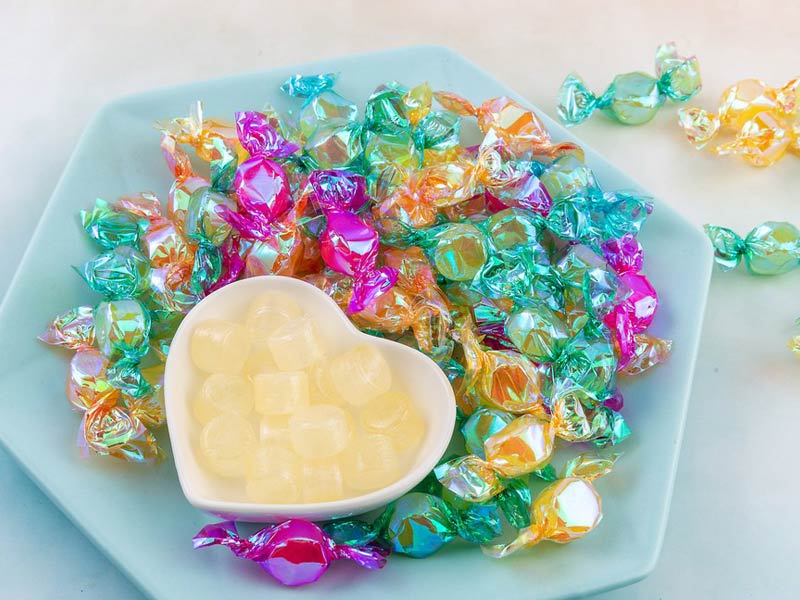

From Sugar Syrup to Colorful Lollipops
Lollipops are one of the most recognizable confectionery products in the world. Their simple appearance — a hard candy attached to a stick — hides a carefully controlled manufacturing process involving sugar cooking, flavor mixing, molding, cooling, and packaging.
While traditional lollipops were produced manually in small batches, modern candy manufacturers rely on automated lollipop making machines and complete production lines to achieve consistent quality, higher output, and better production efficiency.
For candy factories planning commercial production, understanding how lollipops are made is the first step toward selecting the right manufacturing process and equipment.
What Ingredients Are Used to Make Lollipops?
The basic formula of a lollipop usually contains several key ingredients:
1. Sugar and Glucose Syrup
Sugar provides the sweetness and structure of the candy. Glucose syrup helps prevent crystallization and improves the texture of the final product.
2. Water
Water is added during the cooking process to dissolve sugar and create a uniform syrup.
3. Flavoring and Coloring
Natural or artificial flavors and food-grade colors are added to create different varieties, such as fruit flavors, milk flavors, or seasonal designs.
4. Functional Ingredients
Some manufacturers also add ingredients such as:
- Vitamin supplements
- Acid regulators
- Filling materials
- Special flavor combinations
The final recipe depends on the target market and product positioning.
How Are Lollipops Made Step by Step?
Industrial lollipop production usually includes several key stages, from sugar preparation to final packaging.
The complete process can vary depending on whether manufacturers use a depositing process or a die-forming process. However, most commercial lollipop production follows a similar workflow.
Step 1: Sugar Dissolving and Syrup Preparation
The first stage of lollipop production is preparing the sugar syrup.
Sugar, glucose syrup, and water are mixed together and heated until the ingredients completely dissolve.
At this stage, manufacturers need precise temperature control because the sugar solution directly affects:
- Candy hardness
- Transparency
- Texture
- Shelf stability
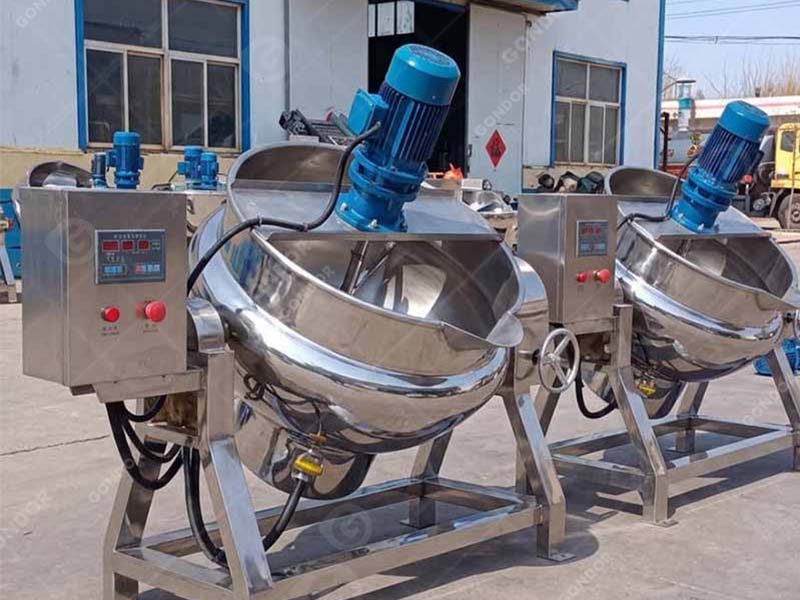
For industrial production, a sugar melting machine or cooking system is commonly used to ensure stable heating and consistent syrup quality.
Step 2: Vacuum Cooking and Concentration
After dissolving, the sugar syrup enters the cooking stage.
The purpose of cooking is to remove excess moisture and achieve the correct sugar concentration.
Modern candy factories often use vacuum cooking technology because it can:
- Reduce cooking temperature
- Protect flavor compounds
- Improve candy clarity
- Provide more stable product quality
The cooked candy mass becomes a clear and highly concentrated syrup ready for forming.
Step 3: Adding Colors, Flavors, and Other Ingredients
Once the candy syrup reaches the required temperature, flavors and colors are added.
This stage requires careful control because excessive heating can affect:
- Aroma
- Color brightness
- Final taste
For multi-color or multi-flavor lollipops, manufacturers may use specialized depositing systems that allow accurate control of different candy materials.
Step 4: Forming the Lollipop Shape
This is the most important stage of the lollipop manufacturing process.
There are two common industrial forming methods:
Method 1: Die-Forming Lollipop Production
Die-forming is widely used for traditional hard lollipops.
The candy rope is shaped and pressed by molds into different designs.
Advantages include:
- Wide variety of shapes
- Strong production capacity
- Suitable for large-scale manufacturing
By changing molds, manufacturers can produce:
- Round lollipops
- Heart-shaped lollipops
- Cartoon-shaped candies
- Custom branded designs
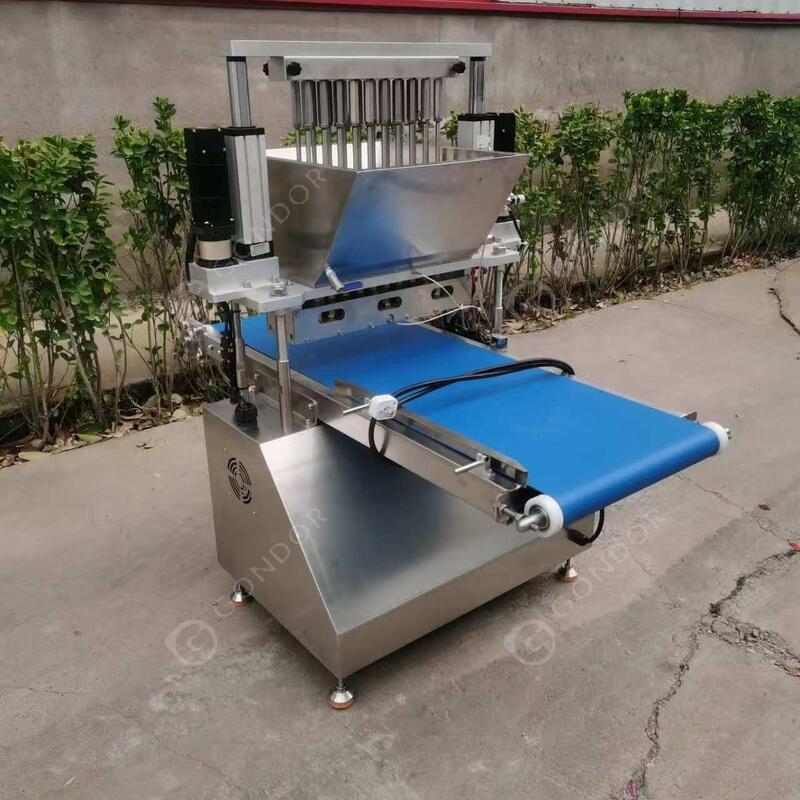
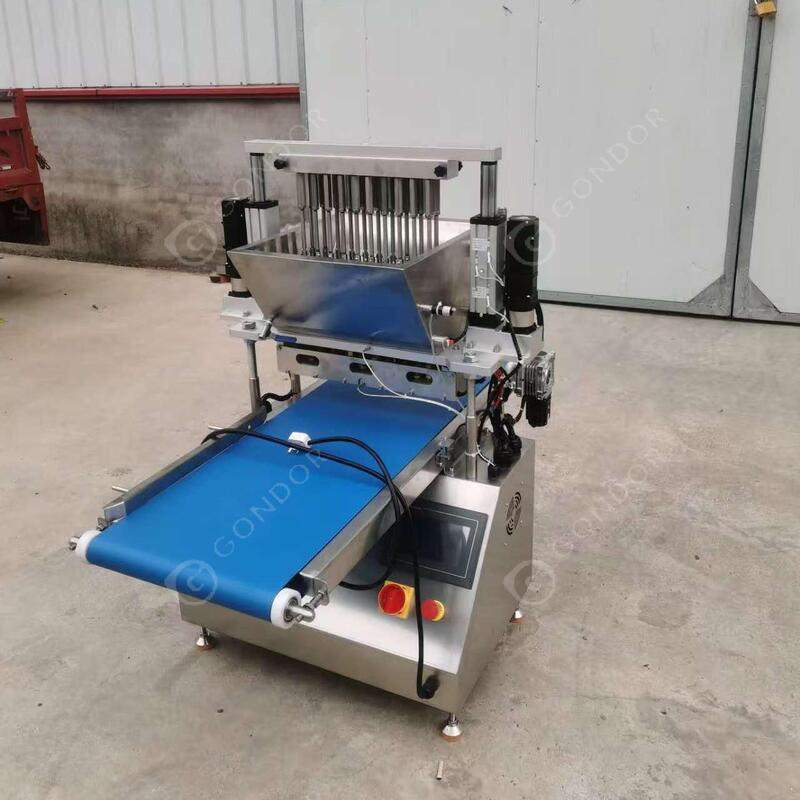
Method 2: Depositing Lollipop Production
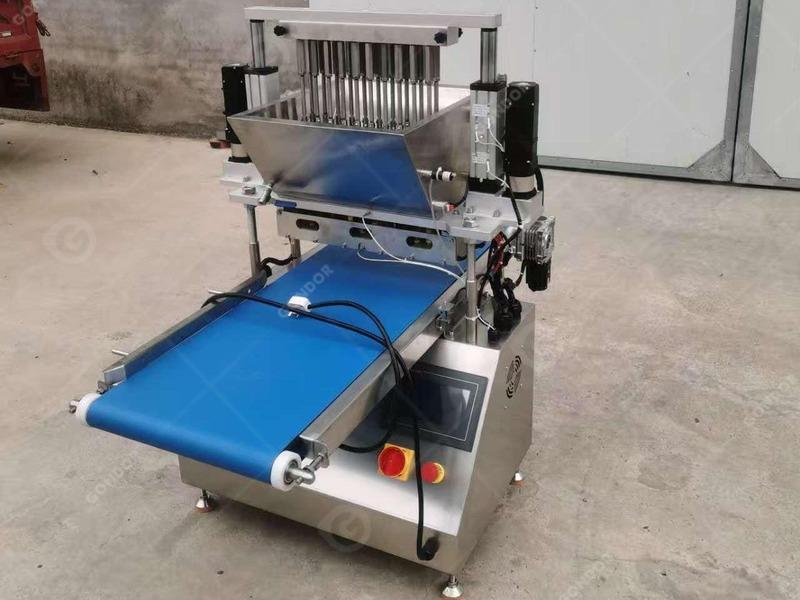
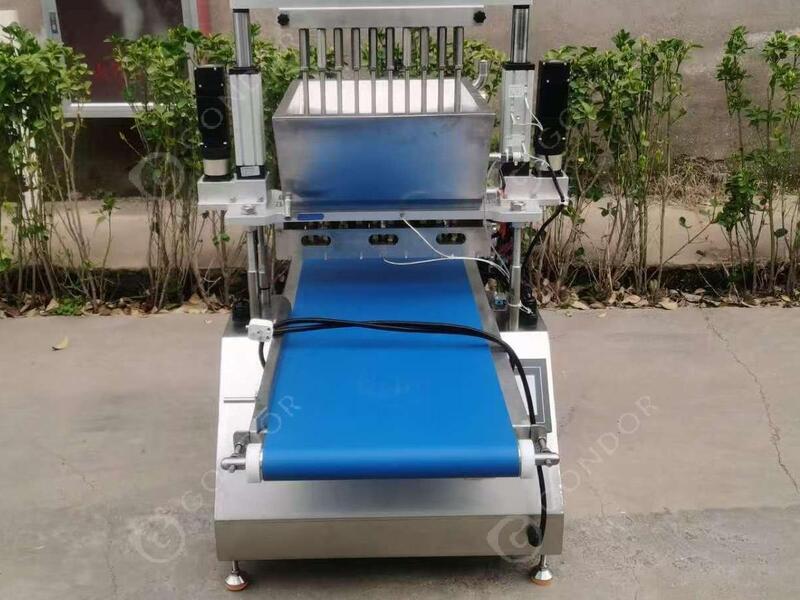
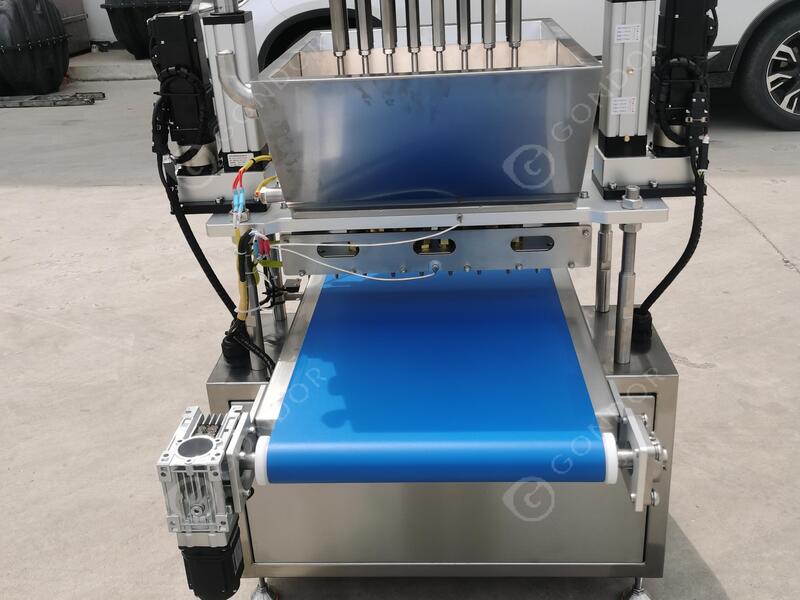
Depositing technology uses precise nozzles to inject liquid candy syrup into molds.
This method provides:
- Smooth candy surfaces
- Accurate weight control
- Less material waste
- Better automation
It is especially suitable for manufacturers producing premium lollipops, multi-color products, or customized designs.
Step 5: Cooling and Solidification
After molding, lollipops need controlled cooling to become hard and stable.
Cooling affects:
- Candy hardness
- Surface appearance
- Demolding performance
Industrial production lines normally use cooling tunnels or cooling systems to maintain consistent temperature conditions.
Without proper cooling, problems may occur, such as:
- Sticky surfaces
- Shape deformation
- Uneven texture
Step 6: Demolding and Quality Inspection
After cooling, finished lollipops are removed from molds.
Manufacturers usually check:
- Candy shape
- Stick position
- Weight consistency
- Surface defects
Automated production lines help reduce manual inspection errors and improve production stability.
Step 7: Lollipop Packaging
The final step is packaging.
Packaging protects lollipops from:
- Moisture
- Dust
- Physical damage
Common packaging methods include:
- Individual wrapping
- Bag packaging
- Box packaging
- Custom branded packaging
A complete candy production solution often integrates candy forming equipment with automatic packaging machines to create a continuous production process.
What Machines Are Used to Make Lollipops?
Commercial lollipop production requires several types of candy processing equipment.
A typical industrial lollipop production line may include:
Sugar Melting and Cooking Equipment
Used for preparing and concentrating sugar syrup.
Main functions:
- Sugar dissolving
- Heating control
- Syrup preparation
Lollipop Forming Machine
The core equipment for shaping candy products.
Depending on production requirements, manufacturers can choose:
- Die-forming lollipop machines
- Depositing lollipop machines
Cooling System
Ensures fast and stable candy solidification.
Packaging Machine
Automatically wraps finished lollipops and improves production efficiency.
How Does an Industrial Lollipop Production Line Improve Candy Manufacturing?
Compared with manual production, automated lollipop manufacturing provides several advantages:
Consistent Product Quality
Automatic control systems maintain stable:
- Temperature
- Candy weight
- Forming accuracy
This helps every batch maintain the same taste and appearance.
Higher Production Capacity
Industrial equipment allows continuous production, making it possible for candy manufacturers to supply large markets.
Flexible Product Development
Modern lollipop machines can support:
- Different shapes
- Multiple colors
- Various flavors
- Customized molds
This allows brands to create unique products for different customers.
Choosing the Right Lollipop Making Machine for Your Factory
Before investing in lollipop production equipment, manufacturers should consider several factors:
Production Capacity
Small candy businesses may need semi-automatic equipment, while large factories usually require fully automatic production lines.
Product Type
Different lollipop designs require different forming technologies.
For example:
- Standard hard lollipops → die-forming technology
- Premium colorful lollipops → depositing technology
Level of Automation
Automation level affects:
- Labor requirements
- Production stability
- Long-term operating costs
Gondor Candy Machinery Solutions for Lollipop Production
As a candy manufacturing equipment supplier, Gondor provides solutions for different confectionery production needs, including lollipop making equipment, hard candy production equipment, gummy candy machines, and customized candy production lines.
For manufacturers producing lollipops at commercial scale, a complete production line can integrate:
- Sugar cooking system
- Candy forming machine
- Cooling system
- Packaging equipment
The equipment configuration can be customized according to:
- Production capacity
- Candy type
- Factory layout
- Market requirements
Gondor’s candy machinery solutions are designed to help confectionery businesses move from recipe development to stable industrial production.